In long-range observation, surveying, outdoor exploration, and professional target acquisition, accurate distance information is essential. Compared with traditional measuring methods, laser rangefinders can measure long distances quickly and provide users with fast, accurate, and convenient ranging information.So, how does a laser rangefinder work, and what is the principle behind it?This article briefly explains the working principle of laser ranging and introduces how the MH-BR06 Target Acquisition System supports long-range distance measurement.
How Does a Laser Rangefinder Work?
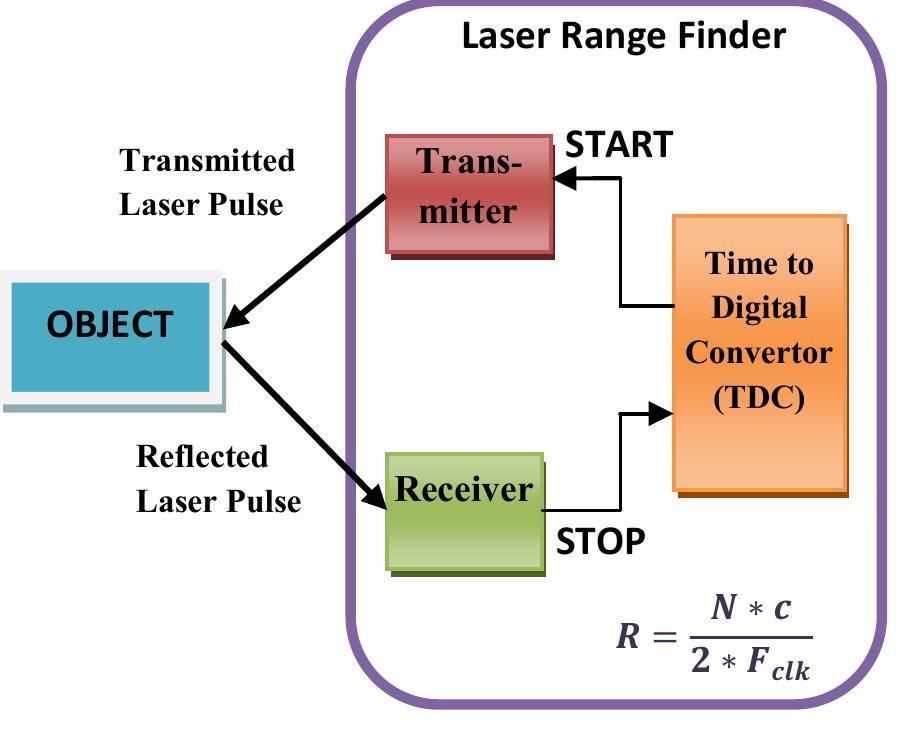
The basic principle of a laser rangefinder is relatively straightforward. It emits a laser beam toward a target and receives the reflected signal to calculate the distance between the device and the target.
The ranging process generally includes the following steps:
1. Laser Emission
When the ranging function is activated, the device emits a laser beam toward the target.
2. Target Arrival
The laser travels at an extremely high speed and reaches the target.
3. Signal Reflection
When the laser reaches the target, part of the laser signal is reflected back toward the device.
4. Signal Reception and Distance Calculation
The device receives the reflected signal and uses its internal electronic system to calculate the laser's travel time and determine the distance to the target.
The Core Principle of Laser Ranging
Laser rangefinders commonly use the Time of Flight (TOF) principle.
The basic calculation formula is:
D = C × T ÷ 2
Where:
D = Distance
C = Speed of Light
T = Laser Round-Trip Time
The result is divided by two because the measured time includes the laser's complete round trip from the rangefinder to the target and back.
With high-speed electronics and signal processing technology, a laser rangefinder can quickly process the returned signal and provide distance information within a very short time.
What Factors Affect Ranging Performance?
In practical applications, laser ranging performance can be affected by several factors, including:
Target Reflectivity
Target Size
Weather Conditions
Fog, Rain, or Dust
Laser System Performance
Receiver Sensitivity
For example, large targets with good reflectivity generally provide stronger return signals and more stable ranging results. Long distances, difficult weather conditions, and low-reflectivity targets can place higher demands on the laser transmitter and receiver system.
MH-BR06: A Long-Range Target Acquisition Solution
Based on advanced laser ranging technology, the MH-BR06 Target Acquisition System integrates long-range laser ranging, binocular optical observation, and a digital compass to provide users with comprehensive distance and directional information.
The MH-BR06 features 1535nm laser ranging technology, with a maximum ranging capability of up to 6,000 meters and a ranging accuracy of ±1 meter, making it suitable for long-range distance measurement applications.
8× Optical Magnification for Long-Range Observation
In addition to laser ranging, the MH-BR06 features 8× optical magnification.
Its binocular optical system enables users to observe distant targets more clearly and steadily while performing distance measurements, helping improve observation and target acquisition efficiency.
Integrated 3-Axis Digital Compass
During long-range observation, distance information alone may not always be sufficient.
The MH-BR06 integrates a 3-axis digital compass to provide additional directional information, offering greater support for target observation and positioning.
Rugged Design for Various Environments
The MH-BR06 features a compact and portable binocular design with an IP67 protection rating, helping it adapt to various outdoor environments.
It also supports a Type-C interface and tripod mounting, providing greater convenience and flexibility for different operating and deployment requirements.
MH-BR06 Main Features
Up to 6,000 m Measuring Range
1535nm Laser Ranging
8× Optical Magnification
±1 m Ranging Accuracy
3-Axis Digital Compass
OLED Display
IP67 Protection
Type-C Interface
Tripod Mountable
4 Color Options Available
Conclusion
Laser rangefinders achieve fast and accurate distance measurement through the process of laser emission, target reflection, signal reception, and distance calculation.
With the continuous development of laser, optical, and electronic technologies, modern laser rangefinders are evolving beyond simple distance measurement by integrating additional functions for observation, directional information, and greater adaptability to different environments.
With up to 6,000 m ranging capability, 8× binocular optical magnification, 1535nm laser technology, a 3-axis digital compass, and IP67 protection, the MH-BR06 Target Acquisition System provides an efficient and reliable solution for long-range observation and distance measurement.
Xi'an MH Electronic and TechnologyCo.,Ltdfocuses on infrared thermal imagers and low-light night vision devices, delivering premium full-customization solutions covering appearance, hardware, software and packaging.
We are committed to top-tier tailored services for global partners.
Kindly click our email address to send your inquiry for bespoke solutions.
 tel
tel