What type of camera you need?
2023-02-02
Security is typically an around-the-clock job that doesn’t end just because the sun goes down. Many of our customers, especially within the commercial industrial sector, require advanced tools for nighttime surveillance to provide perimeter security or to monitor buildings or other assets after dark. I always recommend IP cameras with built-in IR (Infrared) LEDs for the highest quality nighttime video surveillance footage.
IR or night vision cameras use infrared light to illuminate images in the dark.
We can’t see it, but infrared light is actually all around us. IR cameras detect these invisible infrared wavelengths, enabling the camera to see in the dark. Most IR cameras have a series of IR LEDs (often situated around the lens) that transmit infrared light at night, or whenever the camera switches to night mode.
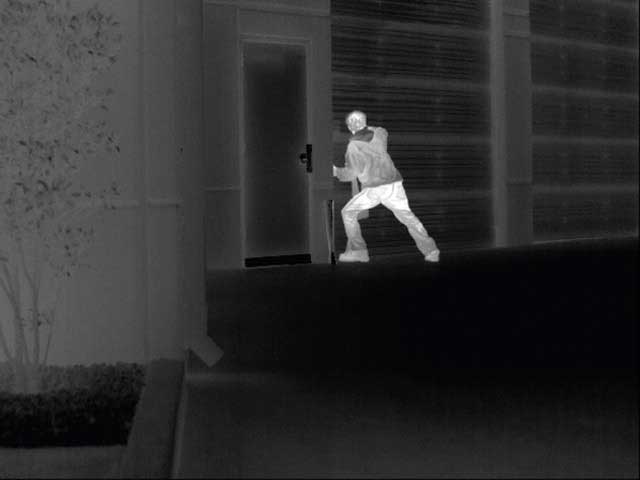
Since infrared light can interfere with color images, most IR cameras have an IR cut-off filter to block infrared light during the daytime. The filter sits between the camera’s lens and sensor, to allow visible light to pass through in the daytime, while blocking out infrared wavelengths. Once the light level drops to a certain point, the filter shifts to allow infrared light in. This process is sometimes called True Day Night (TDN) because it delivers true color images during the day, and black and white or night vision images at night.
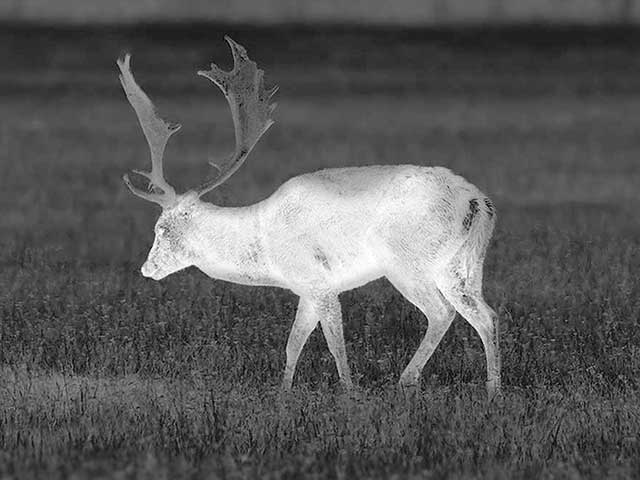
In situations where there is minimal to no ambient light (for example, nighttime surveillance of retail stores or office buildings with no windows or natural light), even a TDN camera will not provide a crystal-clear image. You need powerful IR illuminators to light up complete darkness.
To capture details in the dark, make sure that the camera you’re deploying has an IR illumination distance that is sufficient for the area you need to capture. Lower quality night vision cameras might have multiple LED lights, but they may only brighten objects several feet away. Look at the specification sheet or test the camera to see if it provides adequate illumination distance. (Higher quality IR cameras can illuminate objects 150 feet away or more).
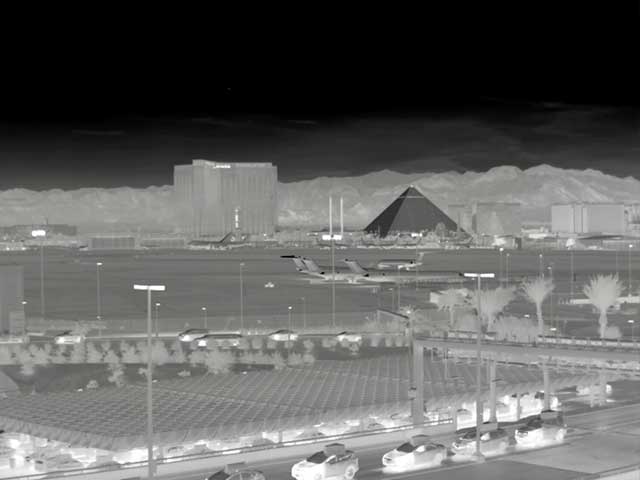
To summarize, night vision cameras can be a great complement to your overall security plan, but it’s important to know what type of camera you need and when to use dynamic smart IR.
Do you need indoor or outdoor nighttime surveillance? And how large is your surveillance coverage area? Make sure to choose a camera that’s built for your specific application, and has the lens and or zoom capacity you require.Turn dynamic smart IR off and use only IR for larger areas like parking lots and stadiums.
Consider illumination distance. Review your camera’s technical specifications to make sure its IR capabilities can cover the distance you need. Consider adding a separate IR beam to supplement illumination at nighttime, if required.
Welcome you send inquiry to :
+86-18792456795 (whatsApp)
jacky@mh-elec.com (click to send email)
 tel
tel


